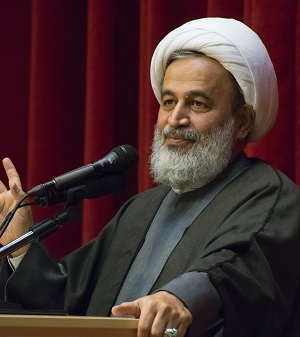
The Art of Free Thinking – Session 10 | Are Religious Beliefs a Form of Dogmatism?

The Art of Free Thinking | Session 10
Are Religious Beliefs a Form of Dogmatism? / Faith Is a Sublime Feeling, Not Dogmatism / Faith Is Different from Mere Intellectual Conviction / To Avoid Dogmatism, the Principles of Thinking Must Be Observed / If One Follows the Principles of Sound Thinking, One Arrives at God
Lecture Details:
- Location: University of Art
- Date: July 26, 2024
- Occasion: Muharram 1446 AH
Are Religious Beliefs a Form of Dogmatism?
One of the most crucial reasons we need to discuss free thinking is that we are religious people, and religion, in some aspects of its nature, appears to involve a degree of dogmatism. When you embrace religion, you submit to God’s command and set your personal preferences aside. On the surface, it seems that free thinking has no place here. Moreover, once you accept certain convictions, you no longer abandon them, which gives the outward impression that religion is at odds with free thinking—just as is widely assumed today.
Faith Is a Sublime Feeling, Not Dogmatism
First, regarding religious convictions, what the Quran primarily emphasizes is not mere mental formulation; it is Iman (faith). Faith is the outcome of sound belief, the living fruit of healthy contemplation that enters the heart and brings a profound sense of peace and security. Experiencing this positive, serene inner state is truly valuable; it is not dogmatism. It is an uplifting, noble feeling—much like the feeling of courage or generosity. Faith is essentially different from dogmatism. What religion truly calls for is not rigid intellectual dogma, but living faith.
Faith Is Different from Mere Intellectual Conviction
Secondly, some individuals may hold correct intellectual convictions without having faith. They possess certainty in a rational and mental sense, yet faith has never entered their hearts; consequently, they ended up denying the truth and fighting against it. Abu Jahl, for instance, was intellectually convinced of the Prophet's (s) truthfulness, admitting: "When the Prophet says revelation comes to him, he is not lying; revelation certainly comes to him, but I simply cannot accept it." Why wouldn't he accept it, despite having reasoned that the Prophet never lied? It was his envy that prevented faith from entering his heart. In the Quran, God clearly separates mere intellectual conviction from faith. The true criterion is faith: a wholesome feeling, a state of deep assurance, and inner tranquility.
To Avoid Dogmatism, the Principles of Sound Thinking Must Be Observed
Furthermore, the fundamental principles of thinking must be sound and valid. If I adhere to one set of principles and you adhere to an entirely different one regarding correct reasoning, no meaningful dialogue can stand. For instance, the most self-evident principle we must mutually accept to converse is the impossibility of the coexistence of opposites (the law of non-contradiction). Speech must not be paradoxical or internally contradictory. For example, right now the weather is either warm or cold; one cannot claim it is simultaneously warm and cold in the exact same sense—unless you qualify the perspectives: "From this aspect it is warm, and from that aspect it is cold." Only then does it avoid contradiction; otherwise, combining opposites is impossible.
If One Follows the Principles of Thinking, One Arrives at God
We must strictly adhere to the principles of sound reasoning. If you genuinely observe the principles of thinking, you will naturally arrive at God. This is the organic conclusion of healthy contemplation. When you reach the conclusion of sound thinking that has proceeded correctly, that is not dogmatism! Rather, it is the hallmark of dynamic, flourishing thought. In fact, if someone fails to arrive at this truth, it is they who are being dogmatic, for there is an underlying flaw in their reasoning. Conceptually, belief in God is the natural fruit of this very free thinking. That is precisely why blind imitation (taqlid) is not permissible in the foundational principles of faith; your conviction and faith must be the genuine outcome of your own free thought and personal understanding.
Your feedback on this article
Share your thoughts, suggestions, or comments regarding this article.