Mahdism Lecture Series: Raising a Generation for Imam Mahdi (Session 1) | Discerning Hypocrisy: A Prerequisite for the Advent
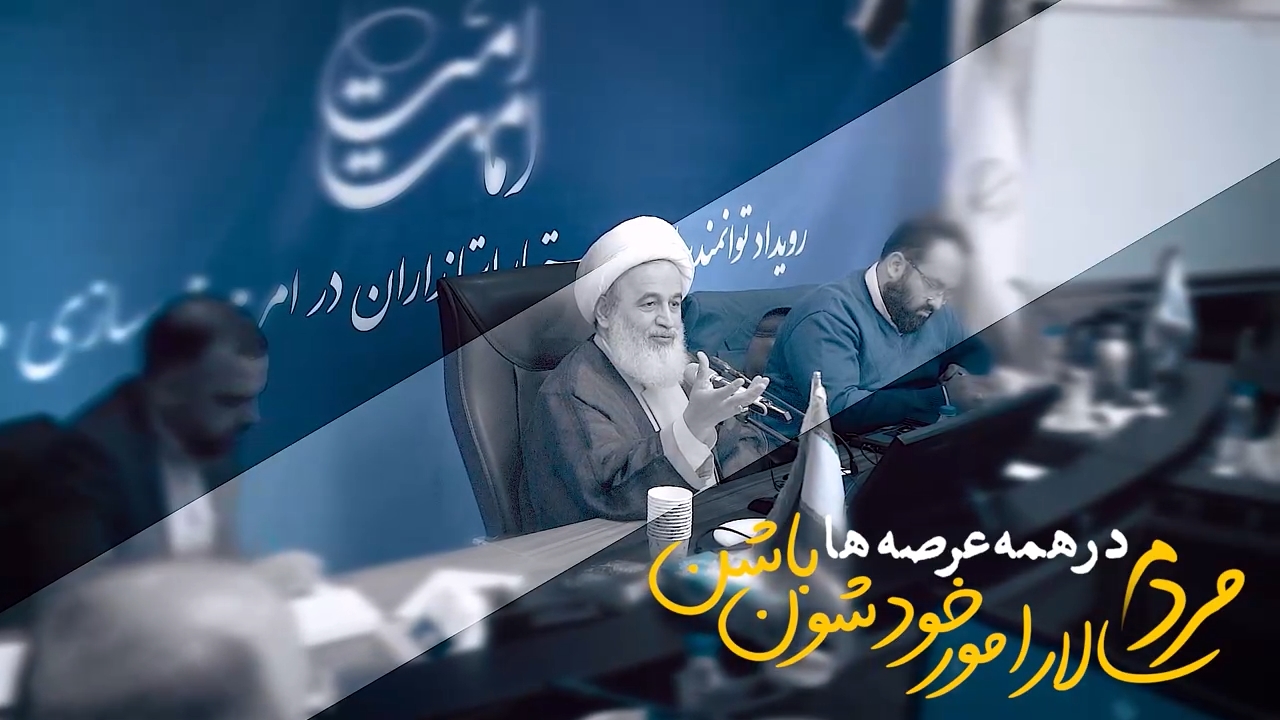
Mahdism Lecture Series on Raising a Mahdist Generation
Discerning Hypocrisy: A Prerequisite for the Reappearance
Information:
- Date: 2024
- Venue: Great Fatimiyyah of Tehran - Muḥibbīn-e Mowlā Amīr al-Mu’minīn (a.s.) Congregation
- Topic: Raising a Mahdist Generation (Gnosis of Imam al-Mahdi (a.j.) and Understanding the End Times)
- Audio: Here
Belief in the Messenger of Allah (s.a.w.a.): The Core Matter of Religion
Throughout the history of Islam, the primary struggle has never truly been about proving the existence of God, the necessity of being religious, or the Day of Resurrection. Generally speaking, people did not have an issue with the concept of religion itself, and religion has naturally always existed. The core matter has always been the sheer existential grandeur of the Messenger of Allah.
The greatness and majesty of the Messenger of Allah (s.a.w.a.) was not confined to his own era or meant solely for the people of his time. All the prophets of the past awaited him and communed with his soul, and according to the explicit text of the Holy Qur'an, they took covenants from their nations to believe in this Final Prophet. We must establish a deep, heartfelt bond with the Prophet (s.a.w.a.). In reality, all the love and devotion we hold for the Prophet's descendants and our holy Imams stems from the sacred light of his own existence. We all know that the Awliyā’ (the intimate friends of Allah) are all radiant rays emanating from the holy light of the Prophet (s.a.w.a.). We can present love for and belief in the Prophet (s.a.w.a.) as a profound mystery and a fundamental pillar in religion.
The Essence of Faith in the Messenger of Allah (s.a.w.a.) Is Faith in Allah Himself!
The true benchmark of having faith in Allah is having faith in the Messenger of Allah (s.a.w.a.). Therefore, one must cultivate a personal connection with the Seal of the Prophets himself. Obeying the Holy Prophet (s.a.w.a.) is, in truth, the very criterion by which we can claim to believe in Allah. In the Holy Qur'an, it is stated that if you obey the Prophet, yet deep down in your heart you feel resentment or unease regarding his judgment, Allah has sworn that you do not truly possess faith (Surah An-Nisa, verse 65). The inner truth and essence of believing in the Messenger of Allah is believing in Allah. How can we discern whether we are sincere in our claim of faith in Allah? The ultimate criterion is our faith in the Messenger of Allah.
The Necessity of Connecting with the Holy Prophet (s.a.w.a.) and Submitting to Him
How are we to attain such profound conviction and heartfelt faith? By witnessing the Prophet's miracles? It does not require witnessing them with our eyes; simply hearing his blessed name and studying his history should kindle this realization within our hearts. The soul of the Holy Prophet (s.a.w.a.) is immense and full of majesty, and Allah has sent his noble descendants to us so that we may forge a bond with that magnificent persona. They are the emissaries of the Messenger of Allah.
Thus, building a connection with the person of the Messenger of Allah and truly realizing the grandeur of his character is of fundamental importance. According to the verses of the Qur'an, the very definition of becoming a Muslim is total submission to the command of the Messenger of Allah (s.a.w.a.): “No, by your Lord, they will not believe until they make you the judge in what is disputed between them and find within themselves no discomfort from what you have judged and submit in full submission” (Surah An-Nisa, verse 65). That they submit to your command—and what a glorious submission that is! This is what it means to be a true Muslim. Therefore, one must believe in the person of the Prophet (s.a.w.a.) and affirm his truthfulness. We must attest to the fact that Allah spoke to him and that he was profoundly beloved and cherished in the sight of Allah.
The Phenomenon of Hypocrisy Persisted Even After the Era of the Messenger of Allah (s.a.w.a.)
When the Holy Prophet (s) raised the banner and proclaimed his mission, he deeply impacted society, and in response, certain forces resisted him. All the power-seekers and all the weak-minded individuals aligned with those power-seekers stood in the Prophet's way.
Within a few years, the Holy Prophet (s) weakened the polytheists and disbelievers and moved past that stage, until conditions reached a phenomenon called hypocrisy (Nifaq). Based on a noble Hadith from the Prophet (s), where he stated: "I do not fear for my Ummah from a believer or a polytheist. As for the believer, his faith restrains him [from harming the Islamic society], and as for the polytheist, his own disbelief suppresses him. But my fear for you is from the smooth-tongued hypocrite who speaks what you approve of and acts in ways you condemn." (Kanz al-Ummal, Hadith 29046). The Prophet says: "I fear the hypocrite for my Ummah." The phenomenon of hypocrisy persisted during the time of the Messenger of Allah (s). And after him, this hypocrisy brought countless calamities upon the Awliya of Allah and the descendants of the Prophet (s).
At the time of the reappearance of Imam Mahdi (aj), the world will be filled with light, prosperity, and justice. He will spread all goodness throughout the world, because the era of hypocrisy will come to an end, and "through it, You abase hypocrisy and its people" (a phrase from Du’a al-Iftitah) will be realized.
The Messenger of Allah (s), with all his grandeur and influence, crushed polytheism and forged the Islamic Ummah. Yet, we all know that hypocrisy lingered, and after him, what devastating blows it struck! It was hypocrisy that severed the head of Aba Abdillah al-Hussain (a) and took his family captive. Hypocrisy is a phenomenon that must be understood with great precision.
Types of Hypocrisy in the Era of the Messenger of Allah (s)
Hypocrisy opposing the Messenger of Allah (s) manifested in several stages.
The first stage was subversive hypocrisy—those who opposed the very formation of the Islamic Ummah, such as Abdullah ibn Ubayy, who built the Dirar Mosque. They did not want the Islamic Ummah to take shape at all, and merely feigned Islam. This was one stage of hypocrisy.
The second stage was capitulating hypocrisy—the hypocrisy that lacked the power to resist and surrendered, like Abu Sufyan, who yielded and could no longer engage in active subversion.
The third stage was usurping hypocrisy—the hypocrisy that neither openly destroyed nor merely surrendered, but rather plotted to seize and usurp the succession after the Prophet. It was this hypocrisy that struck the fatal blow.
Today, we must speak about these three types of hypocrisy, because we are meant to be an Ummah that prepares the ground for the humiliation of hypocrisy at the time of the Reappearance.
Discerning Hypocrisy: A Prerequisite for Paving the Way for the Reappearance
Why did the Commander of the Faithful, Ali (a), have to remark implicitly that just as the Messenger of Allah (s) had hypocrites in his ranks, I too have hypocrites in my ranks? What does it mean that hypocrisy will be humiliated in the era of Imam Mahdi (aj)? It means we must recognize and understand hypocrisy!
The three types of hypocrisy we mentioned from the era of the Messenger of Allah (s) also exist in our own society today, and we must recognize all three in order to pave the way for the Reappearance; for the Reappearance means the abasement of the hypocrite and hypocrisy. We must disavow and identify all these forms of hypocrisy; only then will we become worthy of the Reappearance.
To better understand hypocrisy, I seek insight from the words of the Commander of the Faithful, Imam Ali (a.s.). He states: “Two types of men in this world have broken my back: a corrupt person with an eloquent tongue, and an ignorant person with a devout heart. The former conceals his corruption with his eloquence, while the latter conceals his ignorance with his devoutness. Therefore, beware of the corrupt among the scholars and the ignorant among the worshippers, for they are the source of temptation for anyone prone to deviation. For indeed, I heard the Messenger of God (s.a.w.a.) say: ‘O Ali, the ruin of my community lies at the hands of every eloquent hypocrite.’” (Al-Khisal, Vol. 1, p. 69). Two groups broke my back: First, the eloquent hypocrite—a hypocrite who is adept at deceiving others. Second, the foolish worshipper—meaning a religious person who is not himself a hypocrite, but is simple-minded and naive. These two are like conjoined twins. Gullible people provide a platform for hypocrites, and hypocrites deceive the gullible. Consequently, their ranks swell, and under such circumstances, the insightful believer is left oppressed and marginalized.
The Importance of Recognizing Naivety and Hypocrisy
We cannot easily label people as "hypocrites," but we can identify them as naive. In the End Times, we must not be simple-minded believers; rather, we must understand hypocrisy and be adept at discerning hypocrites. There have been times when both the Leader of the Revolution and Imam Khomeini (r.a.) explicitly addressed certain individuals, telling them: "You are naive." I recall statements by prominent figures of the Islamic Republic who said to certain politicians—who genuinely betrayed this country—"You are simplistic in your thinking." This is the most accurate description. A simple-minded person is someone who is fooled by hypocrisy and refuses to believe that hypocrisy can exist in certain people.
This phenomenon exists in our society, and until the Reappearance takes place, we will continue to grapple with it. We must rid ourselves of both naivety and hypocrisy. We must learn to recognize both naivety and hypocrisy.
Mahdism Lecture Series: Raising a Generation for Imam Mahdi (Session 1) | Discerning Hypocrisy: A Prerequisite for the Advent
Now Playing (1 / 1)
تربیت نسل مهدوی/ج۹
Tags
Your feedback on this article
Share your thoughts, suggestions, or comments regarding this article.